
Organizational diagnostics and restructuring
Restructuring that starts with a new chart usually protects the titles and moves the confusion.


Operations problems rarely announce themselves as strategy. They show up as rework, a missed handoff, a vendor who was the only source, or a supervisor who cannot run the review the owner thinks is happening.
We look at how the week actually runs. Who sees a problem in time to act, which number is a souvenir of last month, and where a second source or a clearer role would remove a recurring failure. Training follows that picture, so a new person can run the same review.
The aim is a cadence the organization will keep. A system that collapses when the advisor leaves was a presentation, not an operating change.
This is the same work we do with organizations in Michigan, Illinois, and Ohio.
Restructuring that starts with a new chart usually protects the titles and moves the confusion.
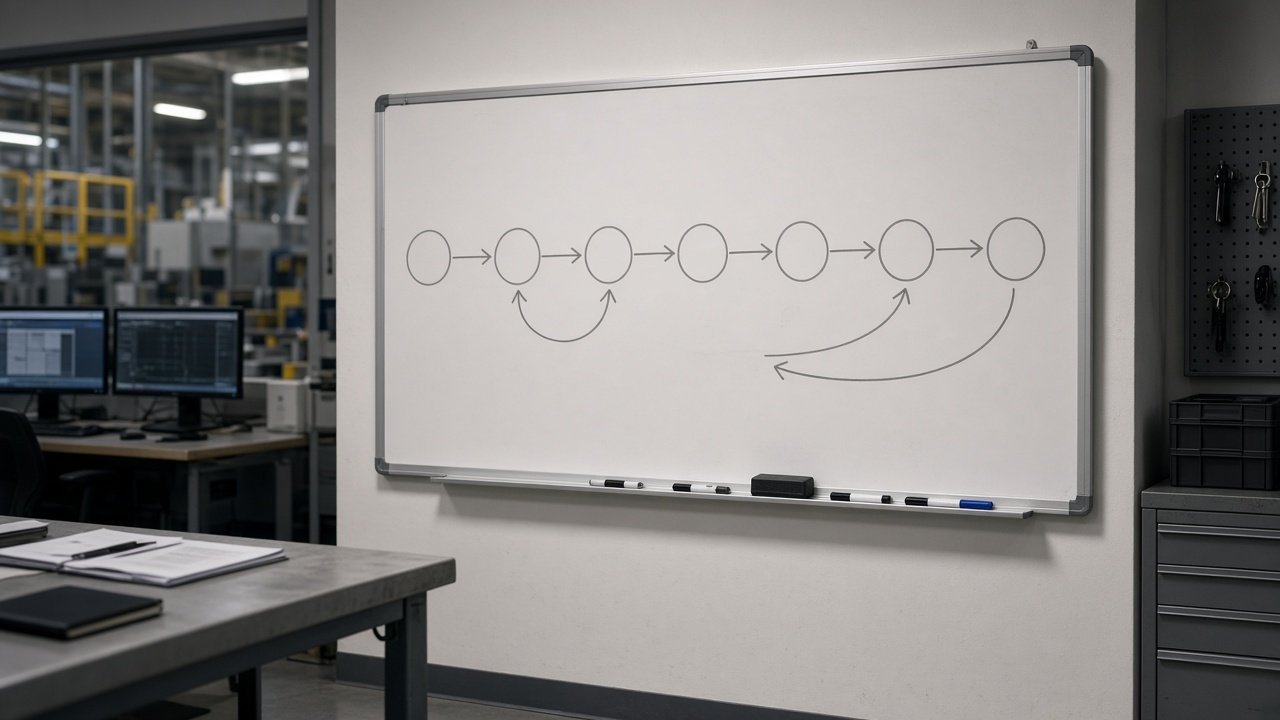
Process work has a bad reputation because it produces maps nobody follows.
The manual steps worth automating first, and who handles the exception.

A second source and a continuity plan for the vendors that can stop an order.

Where time and cost go, and what to reduce first without stopping delivery.

Most performance packs prove that last month happened. They do not help a manager act on Tuesday.

Training that is detached from the job is a day out of the schedule.
Companies whose meeting rhythm no longer matches the work: plants, warehouses, service networks, and headquarters teams that still manage from last quarter's financials.